
Dhammapala Jataka
Dhammapala Jataka
In the ancient kingdom of Varanasi, nestled beside the sacred Ganges, there lived a wise and benevolent king named Brahmadatta. He was known throughout the land for his just rule and his deep respect for all living creatures. One day, while strolling through his royal gardens, the King overheard a conversation between two of his gardeners. One, a young man named Sundara, was lamenting the upcoming marriage of his beloved to a wealthy merchant, a man she did not love.
"Oh, that I could prevent this union!" Sundara cried, tears streaming down his face. "My heart aches with sorrow. If only I possessed the power to change her fate!"
The other gardener, an older man named Dhana, tried to comfort him. "My boy," he said gently, "love is a powerful force, but fate is often a stubborn master. We must accept what is destined."
King Brahmadatta, his heart stirred by Sundara's plight, approached them. "Young man," he said, his voice resonating with kindness, "what troubles you so?"
Sundara, startled, bowed deeply. "Your Majesty," he stammered, "it is a matter of the heart. The maiden I love is to be married to another, a man of means, but not of love."
The King listened patiently, his brow furrowed in thought. He understood the pain of a heart yearning for true connection. "If this is the case," the King declared, "then I shall intervene. I will speak to her father and see if this union can be postponed, or perhaps, if there is another way."
The King, true to his word, summoned the maiden's father, a respected elder of the city. He explained Sundara's deep affection and the young woman's apparent lack of joy in the impending marriage. The elder, though initially hesitant, was swayed by the King's wisdom and compassion. He agreed to reconsider the arrangements.
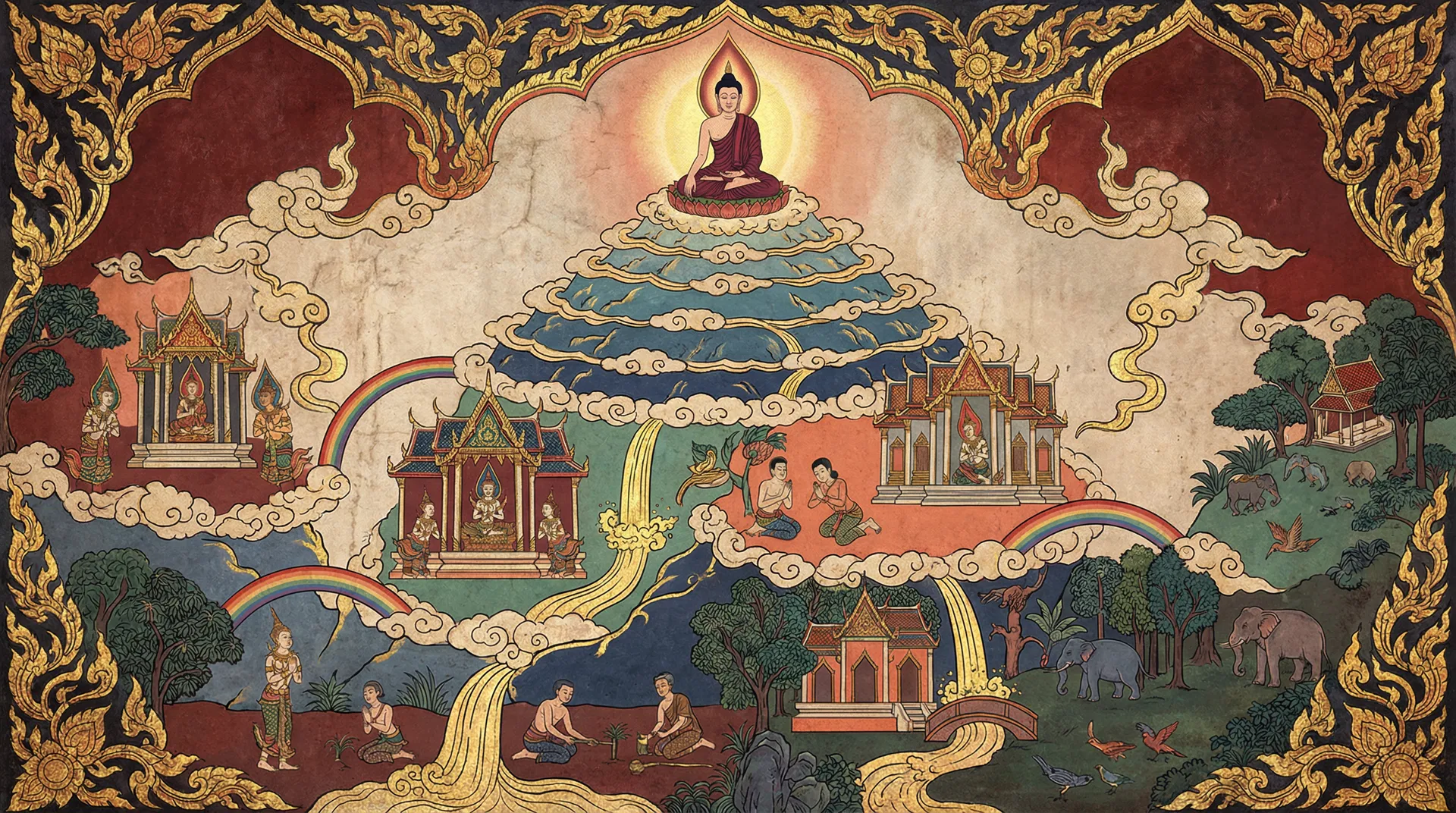
Meanwhile, in the celestial realms, the Bodhisatta, who was then a wise ascetic dwelling in the Himalayan forests, observed these events with his divine insight. He saw the purity of Sundara's love and the King's noble intention to ensure happiness. The Bodhisatta, understanding the profound interconnectedness of all actions, decided to offer a unique gift. He manifested a luminous, celestial flower, a 'Dhammapala flower,' known for its ability to reveal the truth of one's heart. This flower, when presented, would cause anyone who harbored deceit or ill-will to feel an unbearable discomfort, while those with pure intentions would be blessed with serenity.
The Bodhisatta, in his compassion, sent the flower down to the King. It landed gently in the royal courtyard, radiating a soft, ethereal glow. The King, perplexed but intrigued, took the flower. He decided to use it as a symbol of truth during the arranged meeting between the maiden, her father, and the merchant who sought her hand.
When the merchant arrived, the King presented the Dhammapala flower. As the merchant gazed upon it, a strange unease began to grip him. He felt a prickling sensation, a growing discomfort, as if the flower's light was exposing his hidden avarice and his purely transactional view of marriage. He had no genuine affection for the maiden and saw her only as a means to further his social standing. The discomfort intensified, and he began to sweat profusely, unable to meet the King's steady gaze.
The maiden's father, witnessing the merchant's distress, grew suspicious. He then turned his attention to Sundara, who had been permitted to stand at the back of the hall, his heart filled with anxious hope. When Sundara looked at the Dhammapala flower, a wave of peace washed over him. He felt a profound sense of clarity and a deep, unwavering love for the maiden. The flower seemed to hum with a gentle resonance in his presence.
Seeing the stark contrast, the maiden's father understood. The merchant's agitation revealed his true character, while Sundara's calm demeanor spoke of his sincere devotion. He turned to the King and said, "Your Majesty, my eyes have been opened. This merchant's heart is not pure. But this young gardener, Sundara, his love is evident and true. I give my daughter's hand to him, for she deserves a life filled with genuine affection."
A cheer erupted from the assembled courtiers. Sundara, overjoyed, bowed to the King and then to the maiden, who looked at him with a shy, happy smile. The King, pleased with the outcome, thanked the celestial flower for its divine intervention.
The Dhammapala flower, its purpose fulfilled, faded gently, leaving behind a faint, sweet fragrance. King Brahmadatta, inspired by this event, decreed that the principle of seeking truth and purity of heart should always guide his judgments and the decisions of his court. From that day forward, Varanasi flourished, known not only for its wealth but for the profound sense of justice and genuine love that permeated its society.
The Bodhisatta, observing from his Himalayan abode, smiled, knowing that a seed of truth had been planted, and that the reign of King Brahmadatta would continue to be a beacon of righteousness. The purity of Sundara's love, amplified by the King's compassion and the Bodhisatta's divine intervention, had triumphed over deception and societal pressure.
— In-Article Ad —
💡Moral of the Story
True love and genuine intentions will always be revealed, and ultimately triumph over deceit and superficiality. Compassion and justice, when guided by truth, lead to the greatest happiness.
Perfection: Wisdom (Prajna) and Compassion (Karuna)
— Ad Space (728x90) —
More Jataka Tales You May Enjoy
 492Pakiṇṇakanipāta
The Tale of the Grateful Swan
The Tale of the Grateful Swan Once upon a time, in a kingdom blessed with verdant forests and sparkl...
💡 Kindness shown to any living being, no matter how small or seemingly insignificant, is never wasted and can return to us in unexpected and miraculous ways. Gratitude is a powerful force for healing and good.
 43Ekanipāta
The Bodhisatta as the Clever Monkey
The Bodhisatta as the Clever MonkeyHigh in the canopy of a vast and ancient jungle, where sunlight s...
💡 Intelligence and unity are the most potent weapons against overwhelming adversity, and foresight can save lives.
174DukanipātaKuṅkuṇavaṅga Jātaka
Kuṅkuṇavaṅga JātakaIn the verdant land of Kasi, a kingdom renowned for its vibrant silks and skilled...
💡 True mastery and excellence are achieved through unwavering patience, dedication, and meticulous attention to detail. Haste and impatience lead to flaws and mediocrity.
144EkanipātaMaca Hamsa Jataka
The Tale of the Golden Swan King In the realm of the Himalayas, amidst snow-capped peaks and crystal...
💡 True wealth lies in inner virtue, wisdom, and compassion, not in material possessions which are transient.
3EkanipātaThe Bodhisattva and the Golden Deer
The Bodhisattva and the Golden Deer In the ancient kingdom of Mithila, nestled amidst emerald fores...
💡 Selfishness and the failure to help others lead to suffering. When we help others, we receive good in return.
133EkanipātaMakhadeva Jataka
The Tale of the Wise King and the Golden Goose In the ancient city of Mithila, ruled a benevolent ki...
💡 True wealth lies not in accumulating possessions, but in wisdom, contentment, and the understanding of impermanence. Greed destroys the source of sustained benefit.
— Multiplex Ad —